

The most popular football cards in the hobby weren't always worth a fortune. Many were pulled from 30-cent packs, tossed in shoeboxes, or sold for a few hundred dollars before the world caught up to what they were. What separates a $5 common from a six-figure grail isn't the player alone — it's the collision of condition, scarcity, and provenance over time.
With tens of millions of items catalogued by collectors on Collectibles.com, we have a front-row seat to how football cards move. So we pulled the receipts: verified auction records, dated sales, and population data for ten of the most profitable football cards ever traded. Below, we rank them by the highest documented value each player's rookie-era card has reached — and, more importantly, we trace how each one got there and why.
A quick note before the countdown: appreciation is rarely a straight line. Several cards on this list were doubled, then half of them were back. We've kept those corrections in the story because the dips are where the real lessons live.
Football cards are one of the most under-catalogued categories in the entire hobby — for every graded grail, thousands of rookies sit raw and unaccounted for. Which means the next record-setter is still sitting in someone's attic, binder, or shoebox: unrecognized, unsorted, ungraded. Catalogue first — the market data will tell you whether you're holding something special. — Collectibles.com
What Actually Moves a Football Card's Price
Before the list, it helps to understand the levers. Nearly every card below climbed for some combination of these reasons:
Condition scarcity: A card can have a population of 30,000 and still be a unicorn in PSA 10 [the top "gem mint" grade on PSA's 1–10 scale]. The price gap between a PSA 9 and a PSA 10 of the same card is often 10x or more.
Player legacy: Stats fade; legend compounds. The cards that hold value belong to players whose résumés keep growing in cultural weight — championships, records, and that intangible "GOAT" status.
The grading revolution: Third-party grading from PSA, BGS, and SGC turned subjective condition into a standardized, tradable language. A "minty Brady auto" is a story; a "BGS 9" is an asset.
Provenance: A documented chain of ownership — named consignors, auction-house pedigree, original packaging — multiplies value. Buyers pay a premium for proof.
The boom (and the correction): The 2020–2021 pandemic surge sent prices to records across the board. The cards that kept most of those gains were the genuinely scarce ones; the mass-produced ones gave a lot back.
10. Barry Sanders — 1989 Score #257
Cost: Pulled from 1989 Score packs that cost well under a dollar — pennies per card.
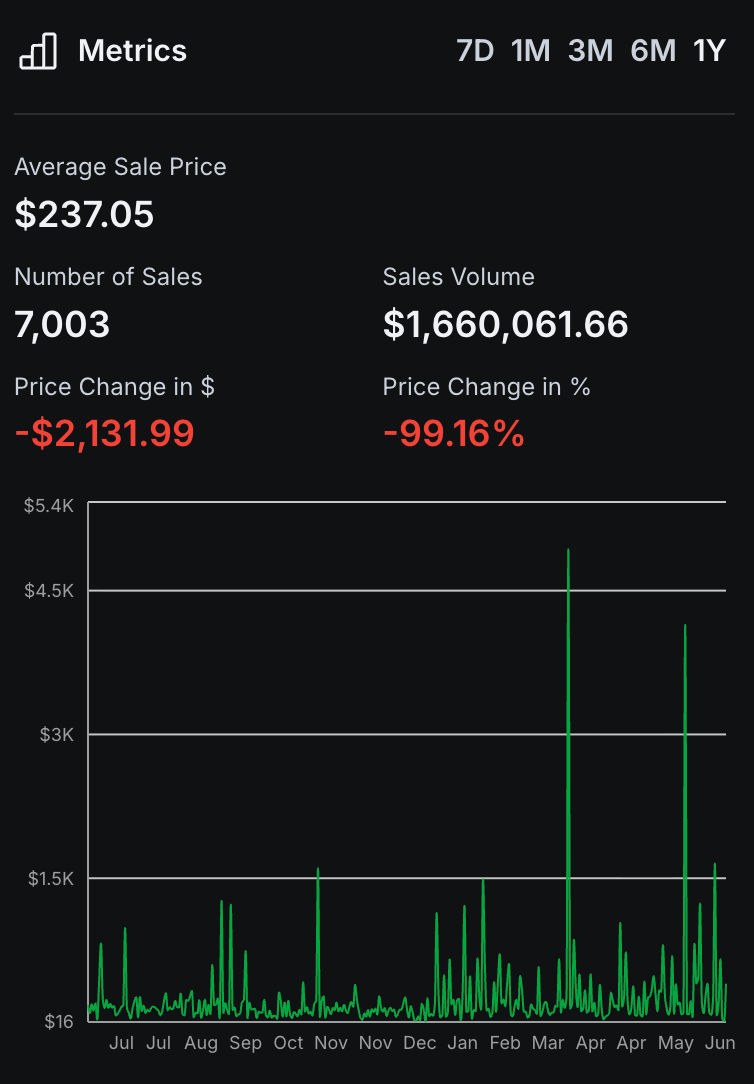
Today: Today, a raw copy trades for roughly $45-65, and a PSA 10 sits around $1,800–$2,200.
Most expensive Sanders card: A 1989 Score #257 PSA 10 that sold at Heritage Auctions for $2,640
Image courtesy of Heritage Auction
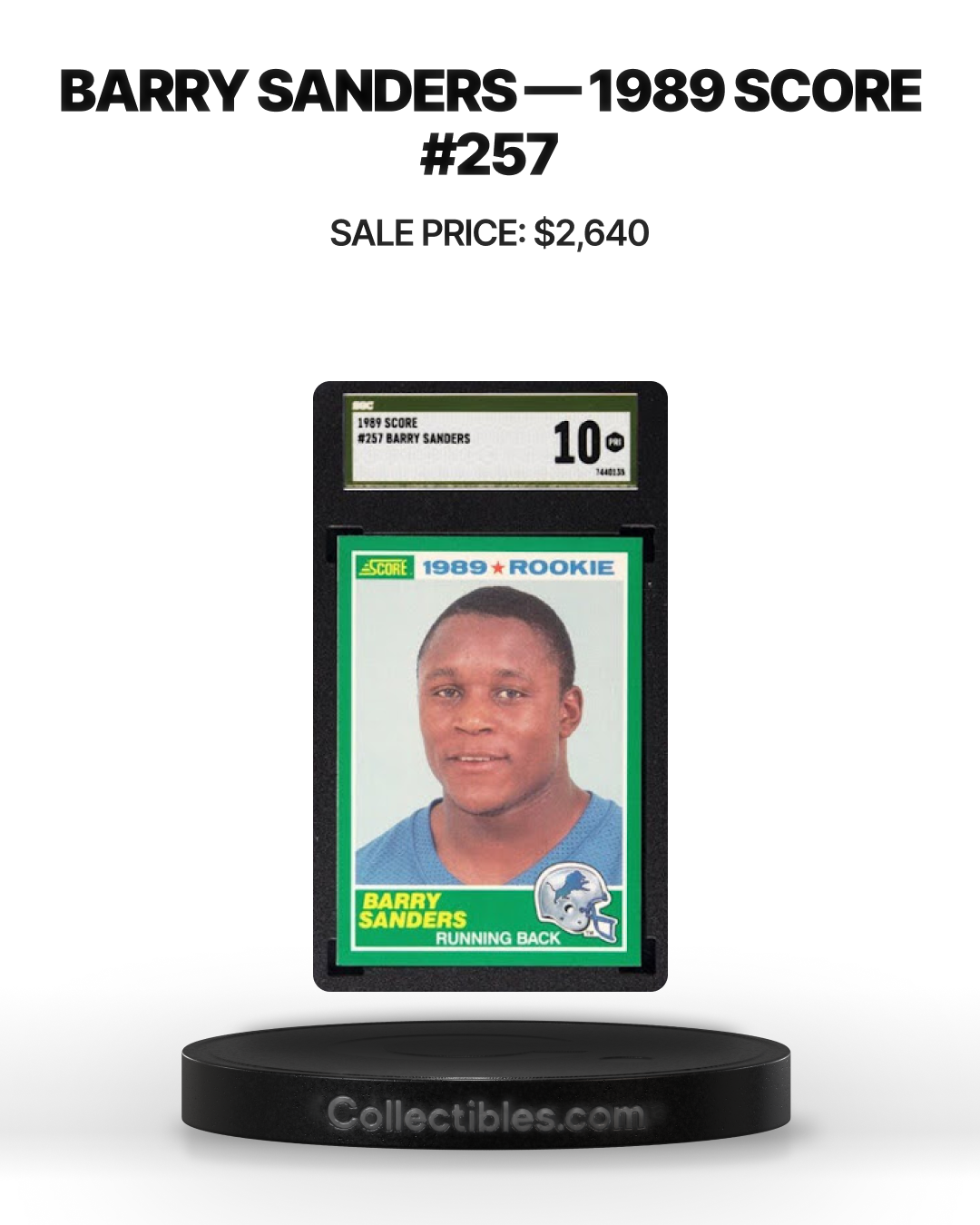
Sanders' rookie comes from the heart of the "junk wax" era [the late-1980s to early-1990s stretch when cards were mass-produced in enormous quantities], which is exactly why it's the most affordable card on this list. With a massive print run and tens of thousands graded, raw and low-grade copies are everywhere. The value lives almost entirely at the top of the condition ladder, where the green borders — prone to chipping, much like Jerry Rice's rookie from the same era — make a flawless gem genuinely tough to pull.
The appreciation here is modest in dollar terms. Still, instructive: even a high-population card of a transcendent player (the most elusive runner the league has ever seen, a Heisman winner who walked away at his peak) holds and slowly builds value in gem condition.
What Collectors Should Know: With junk-wax-era cards, condition is everything — the same card is a $65 commodity raw and a four-figure piece in PSA 10.
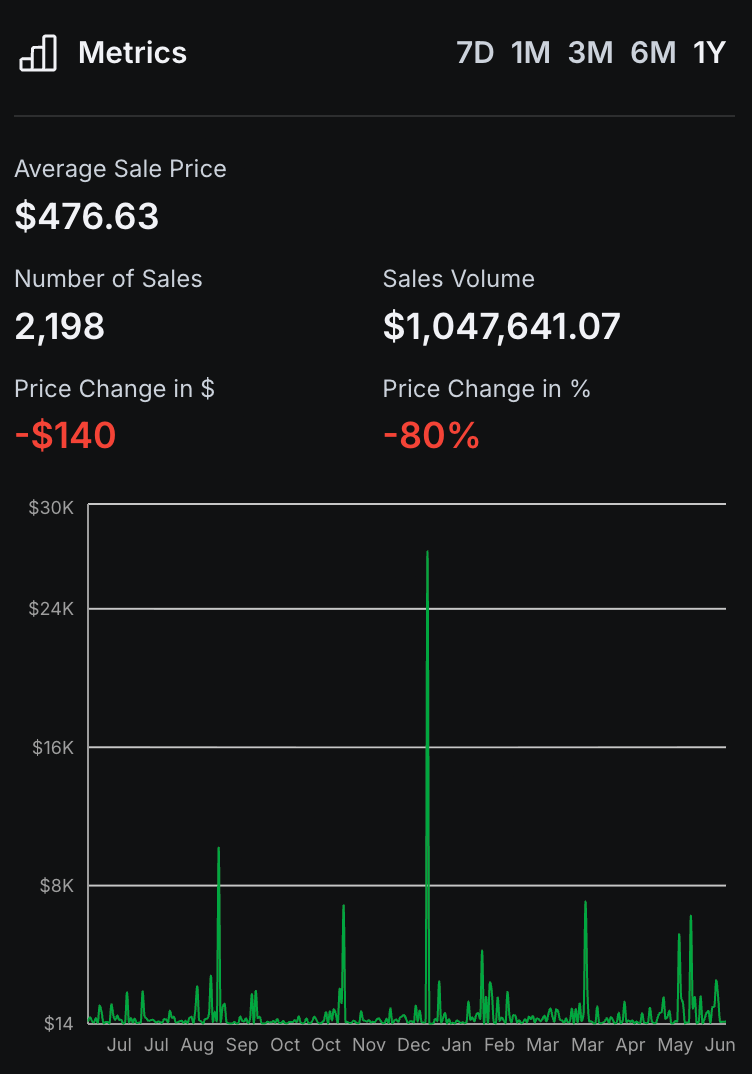
Data courtesy of Collectibles.com player registry
9. Lawrence Taylor — 1982 Topps #434 (All-Pro)
Cost: Pulled from 1982 Topps packs that ran about 30¢ — a couple of cents per card.
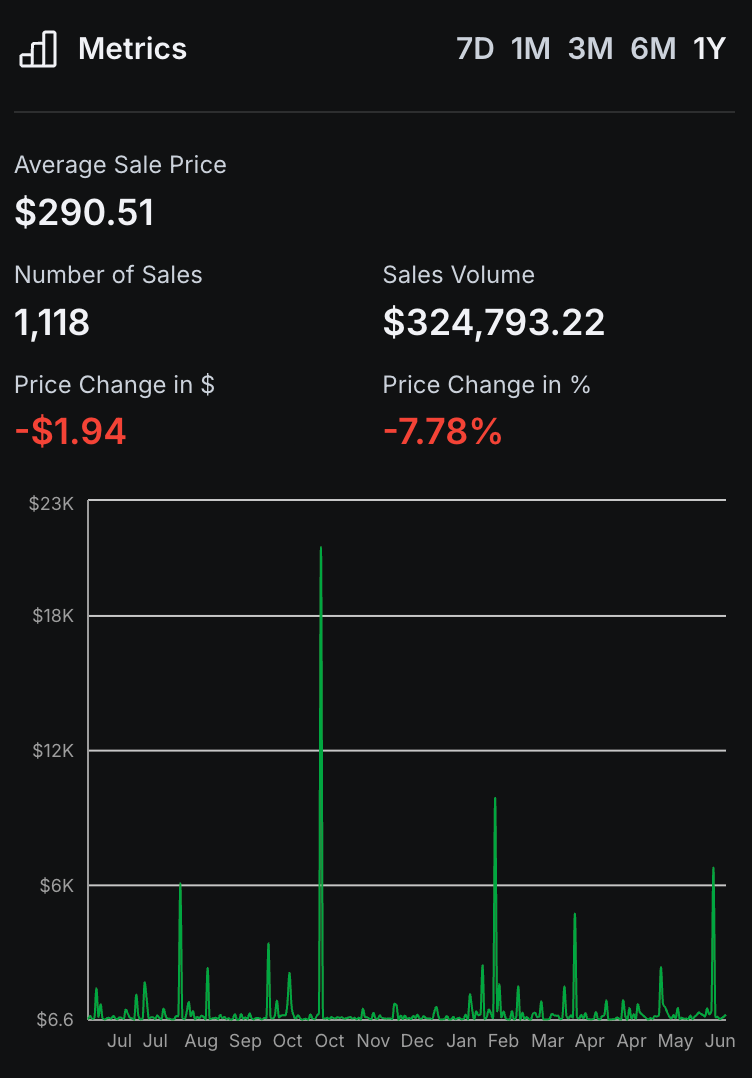
Today: A PSA 10 sold for around $4,800 in 2022 and roughly $7,200–$7,500 in late 2025, where a PSA 9 averages around $370.
Most expensive L.T. card: A 1982 Topps #434 rookie in PSA 10 sold on eBay for $17,616
Image courtesy of PSA
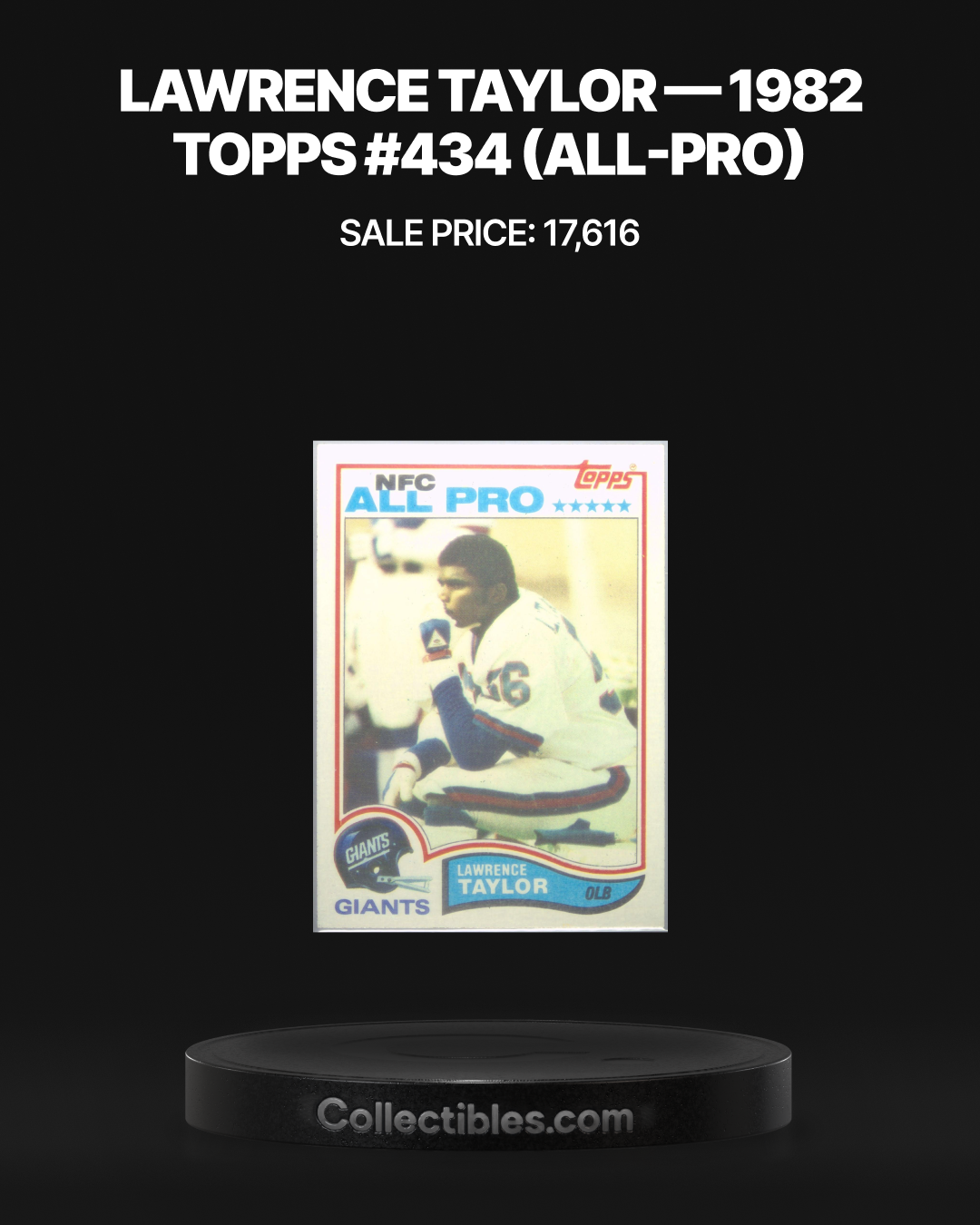
The lone defensive player on this list, and a deserving one — L.T. didn't just star at linebacker, he rewrote how the position is played. His rookie sits in a 1982 set notorious for centering and print defects, which is why only about 192 copies have earned a PSA 10 compared to 1,100 PSA 9s.
That population gap is the entire investment thesis. A PSA 9 is a few hundred dollars; a PSA 10 is a five-figure swing. Collectibles.com catalogues this exact card across more than 70 grade tiers, and the price cliff between grades is one of the clearest condition lessons in the hobby.
What Collectors Should Know: The PSA 9-to-PSA 10 jump on this card is roughly 20x, making it a textbook case for why grade precision matters.
Data courtesy of Collectibles.com player registry
8. Joe Montana — 1981 Topps #216
Cost: Pulled from 30¢ packs of 1981 Topps — about two cents a card.
Today: A PSA 10 sold for about $4,075 in 2005 and recently for around $48,800 — roughly 1,100% over two decades, even after a steep correction.
Most expensive Montana card: A 1981 Topps #216 rookie in PSA 10 for $65,000 on eBay
Image courtesy of eBay
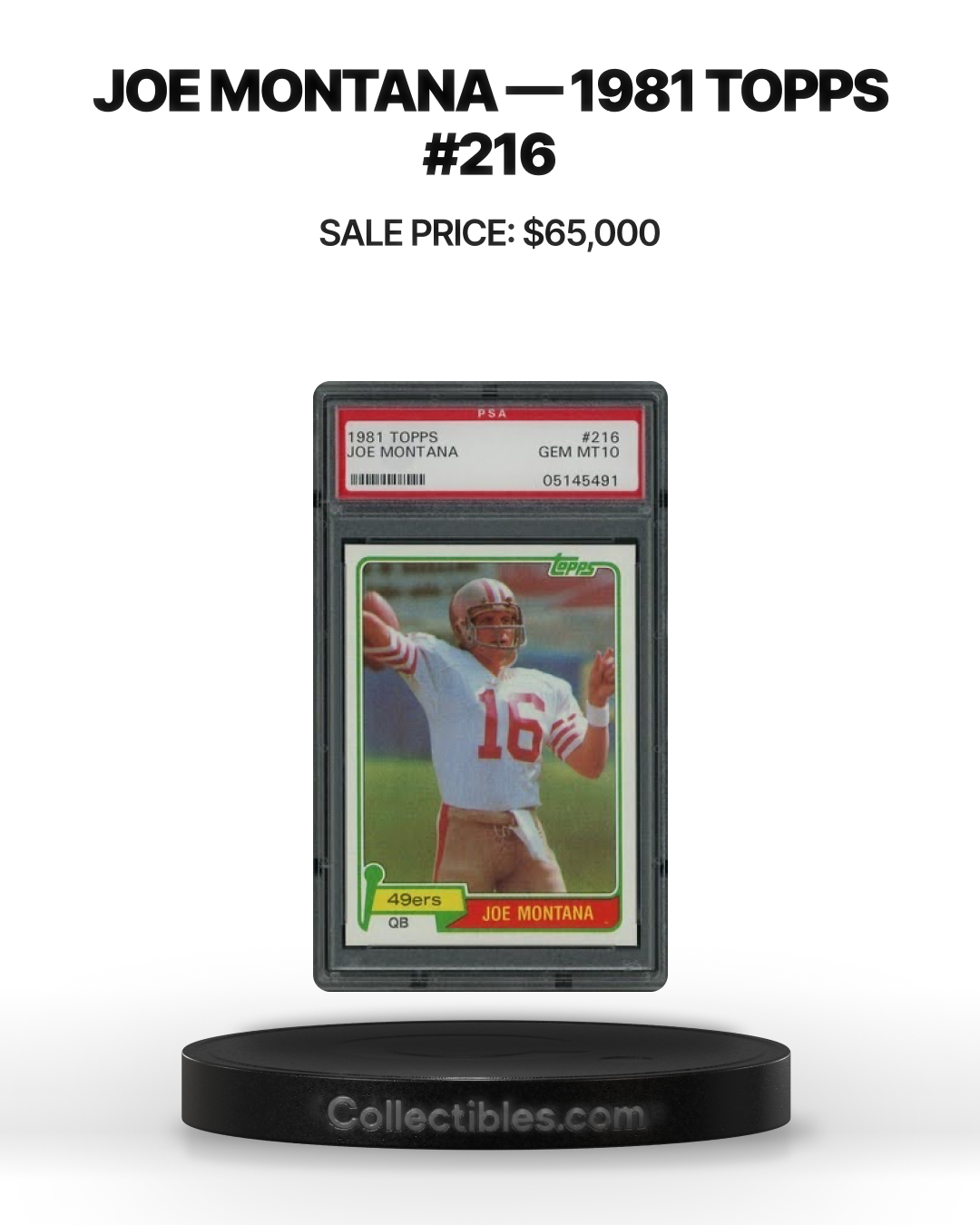
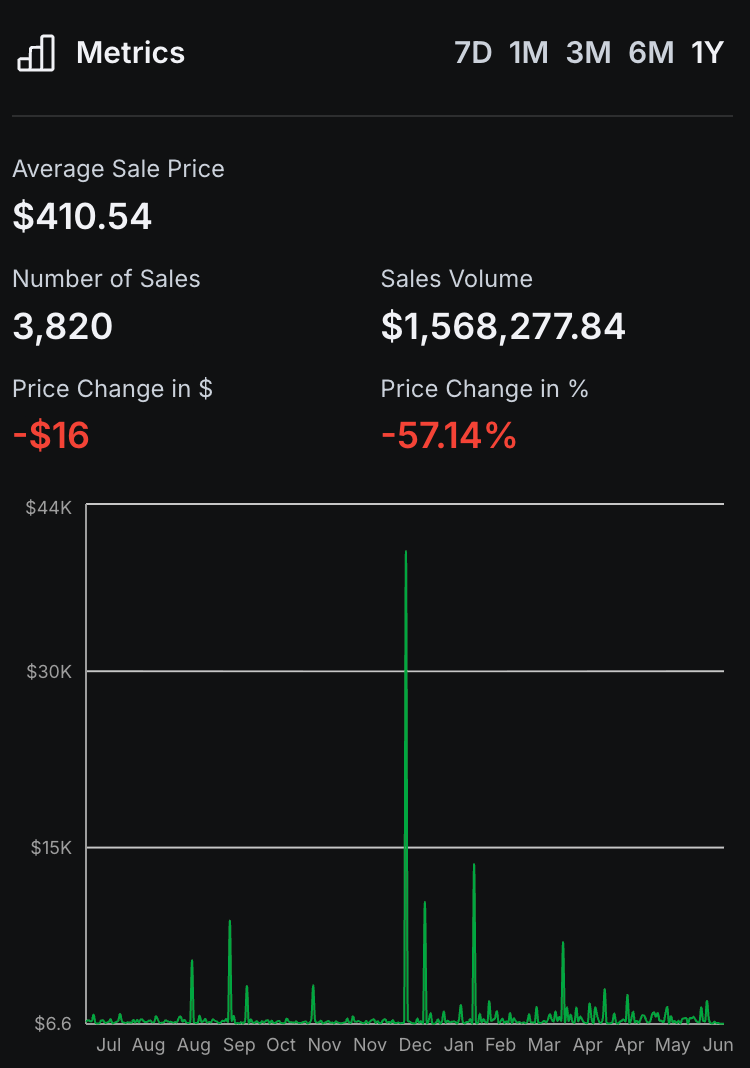
Montana's only recognized rookie is a blue-chip staple, but it carries an honest cautionary arc. PSA has graded more than 33,000 copies, so this is not a rare card — except in PSA 10, where the population is tiny. During the pandemic boom, a gem copy spiked to roughly $100,000; about a year later, the same grade could be found for half that. PSA 9 copies tell a gentler version of the same story, climbing from roughly $300 in 2010 to around $2,000 today.
The "why" is pure legacy: four Super Bowls, the "Joe Cool" mythology, and a card that anchors the 1981 set. The volatility is the lesson — even Hall-of-Fame cardboard overshoots and pulls back.
What Collectors Should Know: A high population means the gains live almost entirely in PSA 10, and even there, the price has swung dramatically with the broader market.
Data courtesy of Collectibles.com player registry
7. Jerry Rice — 1986 Topps #161
Cost: A few cents out of a 1986 Topps pack (which ran under a dollar).
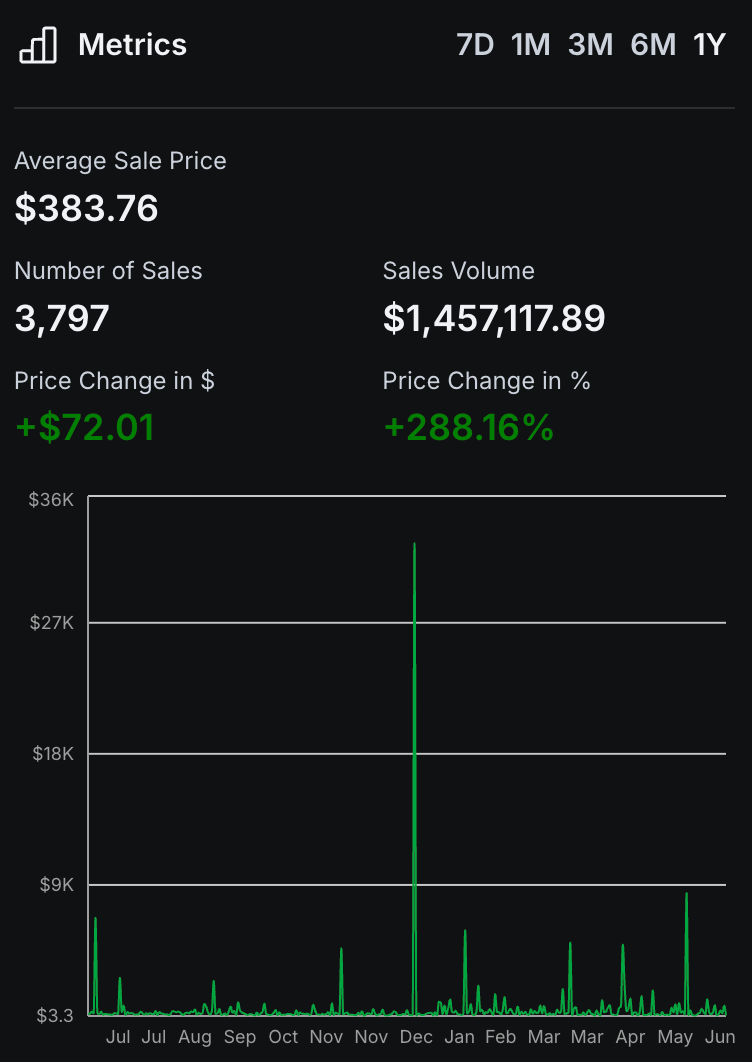
Today: A PSA 10 that fetched around $14,000 in 2016 has sold between roughly $70,000 and $84,000 over the past year, while PSA 9s surged and then corrected by more than 60%.
Most expensive Rice card: His 1986 Topps #161 rookie in PSA 10 — recent sales between roughly $70,000 and $84,000.
Image courtesy of PSA
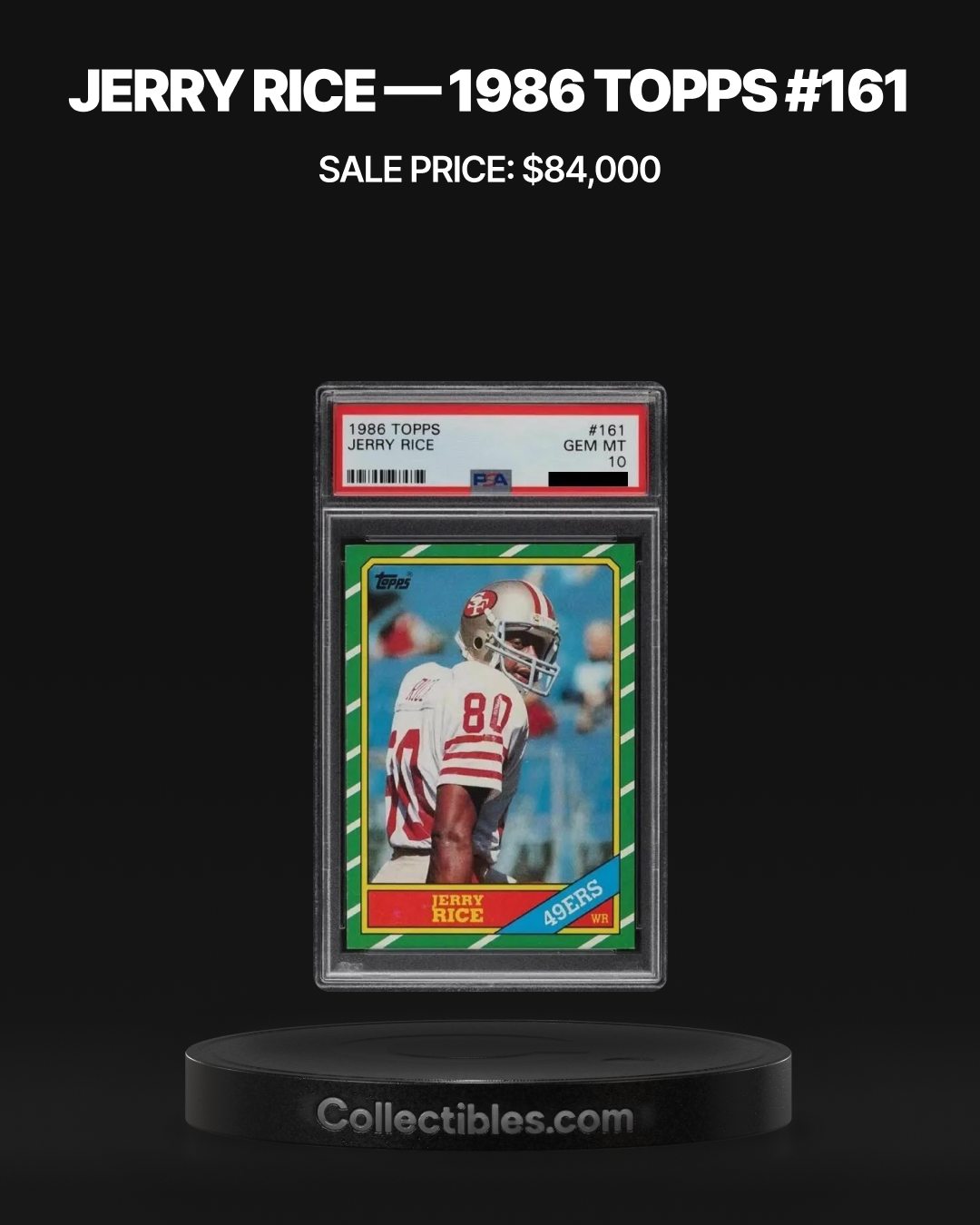
The greatest receiver of all time has a rookie that's deceptively easy to find — and brutally hard to find perfect. The 1986 Topps "football field" green borders chip at the slightest handling, so of the more than 25,000 Rice rookies PSA has graded, only around 60 are PSA 10s. That scarcity at the top is what supports the five-figure gem market.
Below gem, the ride has been bumpy: PSA 9s rocketed up on repack [pre-packaged mystery card products] demand and collector nostalgia, then gave back a large chunk of those gains. It's a clean illustration of how a single recognizable card can be both a long-term winner and a short-term roller coaster, depending on the grade you're holding.
What Collectors Should Know: This is one of the most graded football cards in existence, so its premium is driven entirely by gem-grade scarcity rather than overall rarity.
Data courtesy of Collectibles.com player registry
6. Walter Payton — 1976 Topps #148
Cost: Pulled from 15¢ packs of 1976 Topps — about a penny and a half per card.
Today: PSA 10 copies recently sold around $85,000; PSA 9s run about $5,000–$9,500.
Most expensive Payton card: His 1976 Topps #148 rookie in top grade, which hit $228,000 at the 2021 peak (Heritage).
Image courtesy of Heritage Auctions
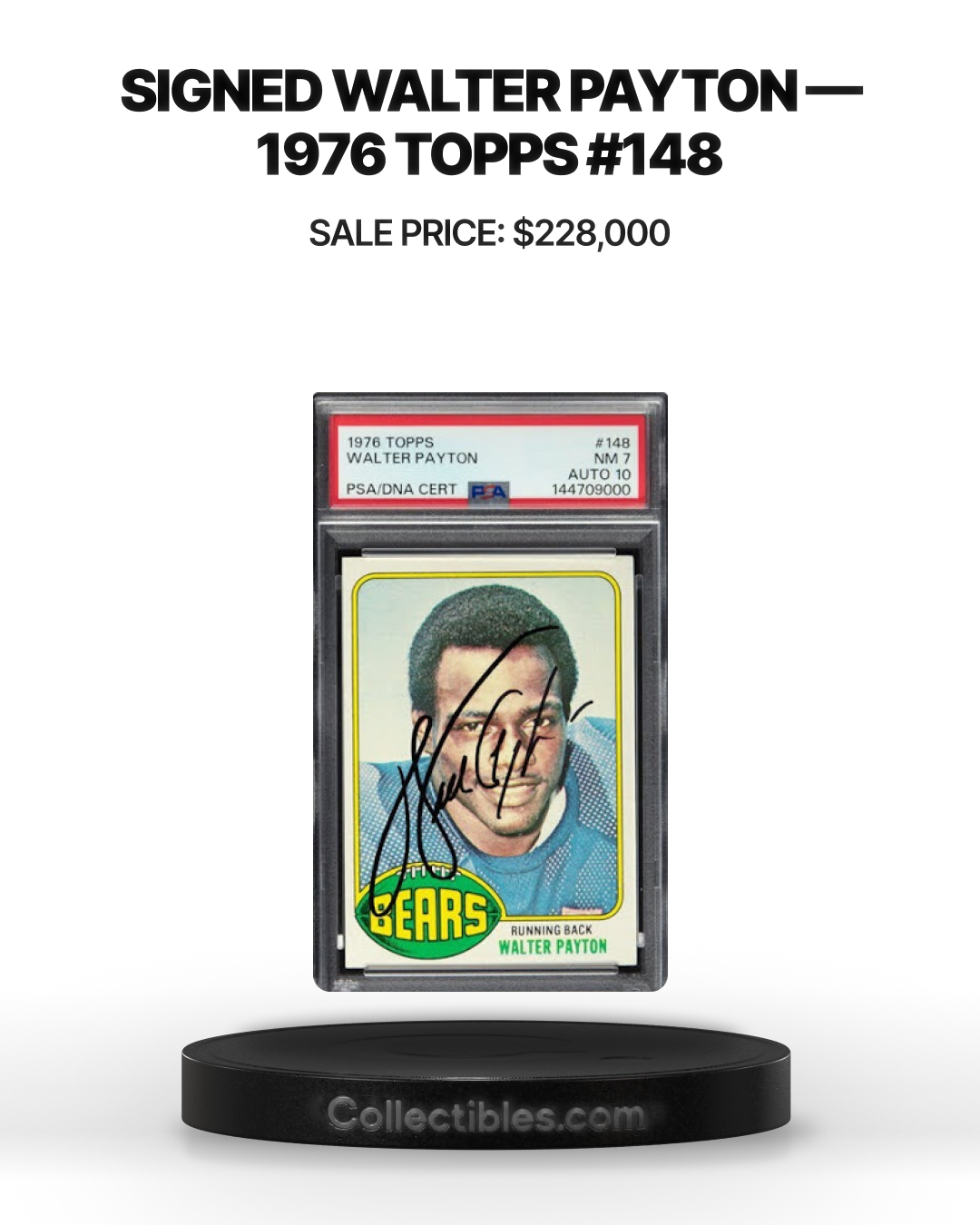
"Sweetness" is the only recognized rookie of one of the most complete running backs, and it's the clear key to the 1976 Topps set. Like the other vintage entries, supply is deceptive — PSA graded more than 13,000 — but only about 54 have reached PSA 10, a roughly 0.4% gem rate driven by chronic centering issues.
Two factors give Payton's card a durable floor: his standing as the longtime all-time rushing leader, and the premium that attaches to his autographs and high-grade copies following his death in 1999 at just 45. Signed examples, scarcer still, regularly clear five figures.
What Collectors Should Know: With only around 54 PSA 10s in existence against 13,000-plus graded copies, this card's entire upside is concentrated at the very top of the grade scale.
Data courtesy of Collectibles.com player registry
5. Joe Namath — 1965 Topps #122
Cost: About a nickel a pack in 1965 — roughly a penny a card.
Today: Today, PSA 7s sell around $15,000, and PSA 8s run $30,000–$40,000; a PSA 9 sold for $264,000 at Heritage in 2018, and the five known PSA 9s are now valued around $200,000–$300,000.
Most expensive Namath card: His 1965 Topps #122 rookie in PSA 9 — valued around $200,000–$300,000, with one selling for $264,000 at Heritage in 2018.
Image courtesy of Heritage Auctions
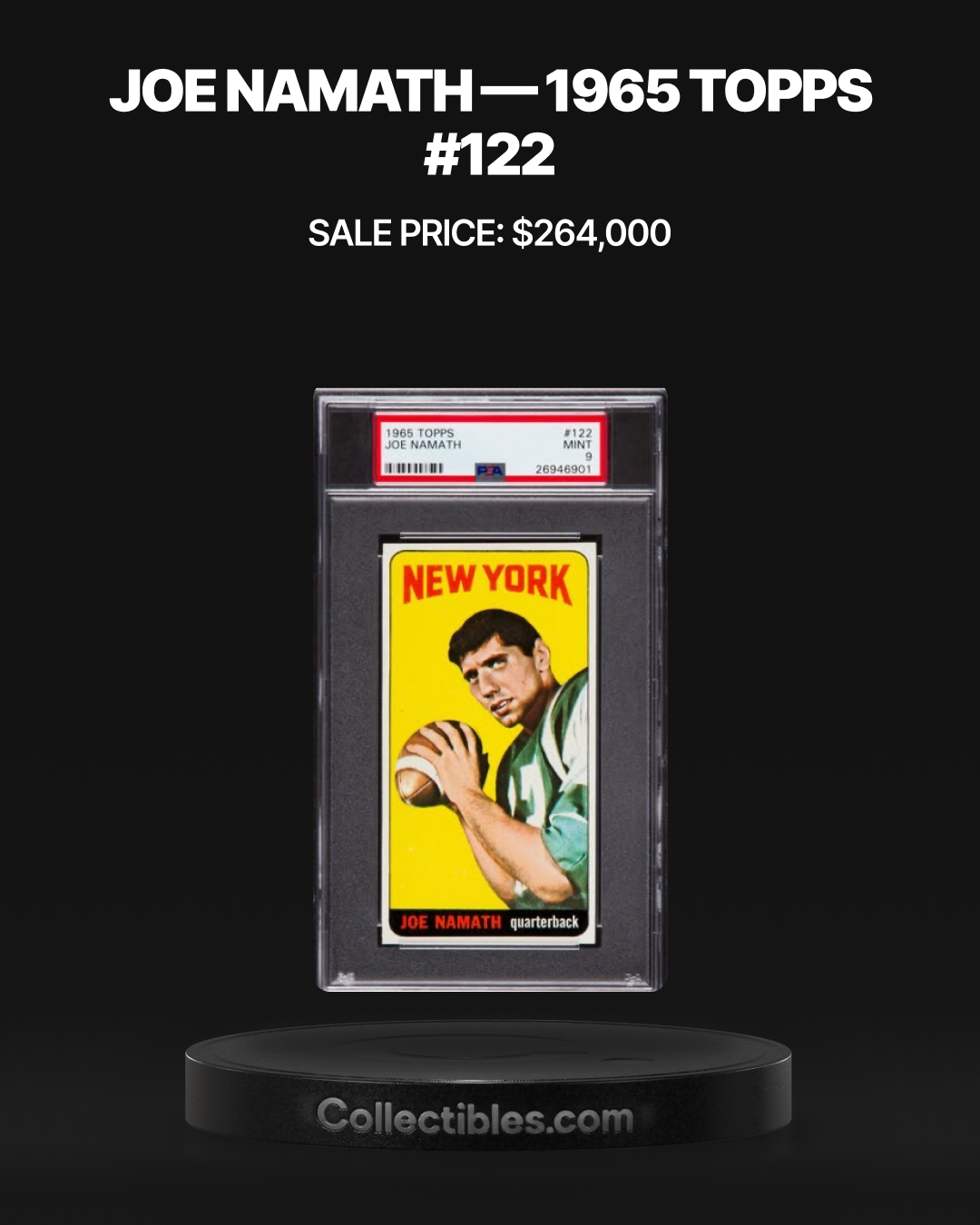
Arguably, the single most recognizable card in the entire football hobby. "Broadway Joe's" only rookie is a short print [a card produced in smaller quantities than others in the set], and a "tall boy" [the oversized format Topps used in 1965, roughly 2½" × 4 11/16"], a combination that makes high grades extraordinarily difficult — the narrow borders and large format punish every nick and miscut. No PSA 10 has ever been awarded.
The value rests on cultural weight, alongside its scarcity: Namath's guaranteed-and-delivered Super Bowl III upset turned him into a crossover icon. Demand for the card has compounded for decades, and the jump from mid-grade to high-grade is enormous, with PSA 7s already commanding five figures.
What Collectors Should Know: As a short-printed tall boy with no existing PSA 10, even mid-grade copies command five figures because pristine examples are essentially unattainable.
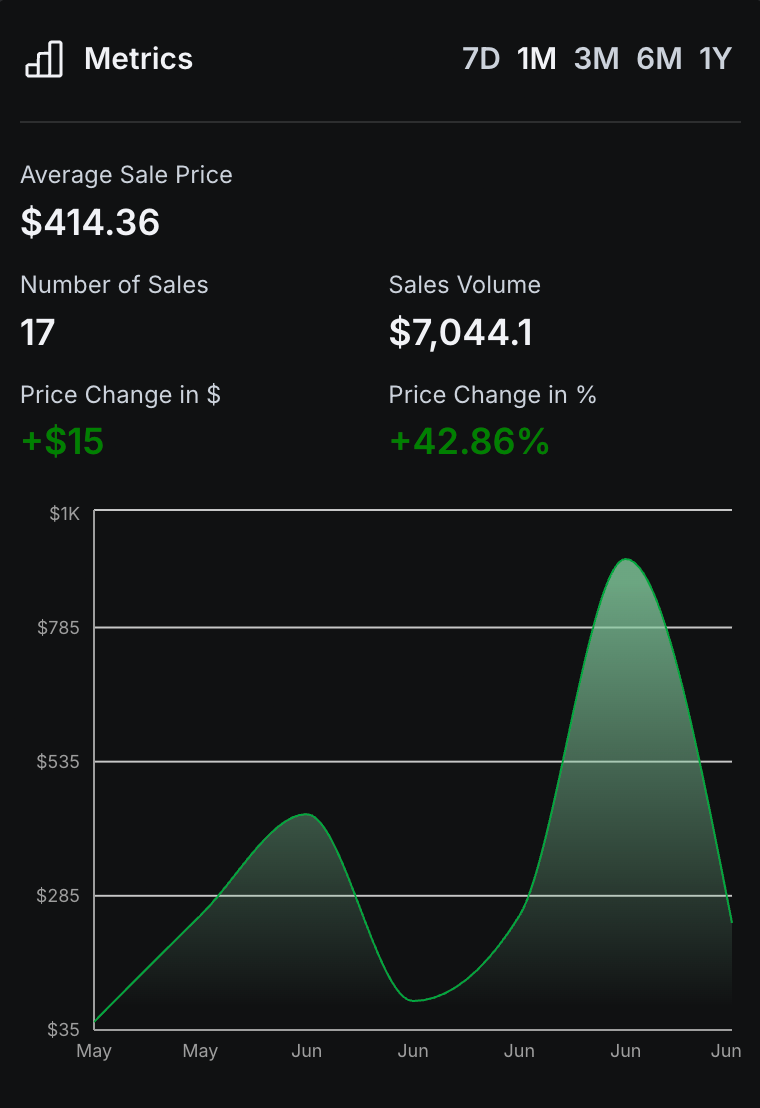
Data courtesy of Collectibles.com player registry
4. Josh Allen — 2018 Panini Prizm (Wildcard Entry)
Cost: The base card was effectively free out of a 2018 Prizm box.
Today: That base PSA 10 peaked near $1,400 in 2021 and now trades around $100–$150 — but a Gold Vinyl parallel numbered /5 sold for $264,000, and a 2018 Select Black Prizm true 1/1 sold for $255,000 in early 2026.
Most expensive Allen card: His 2018 Prizm Gold Vinyl parallel (/5) in PSA 10, which sold for $264,000.
Image courtesy of PSA
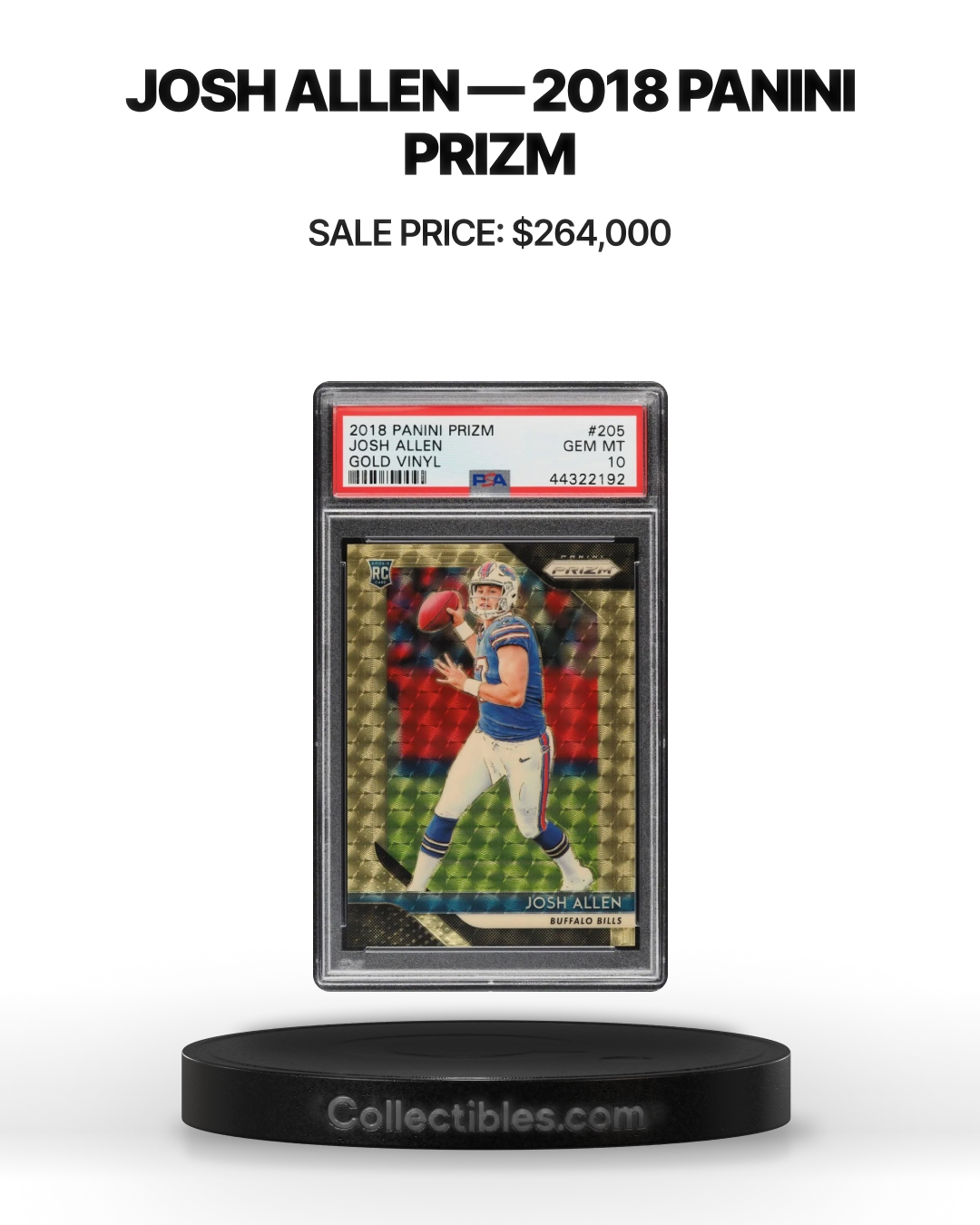
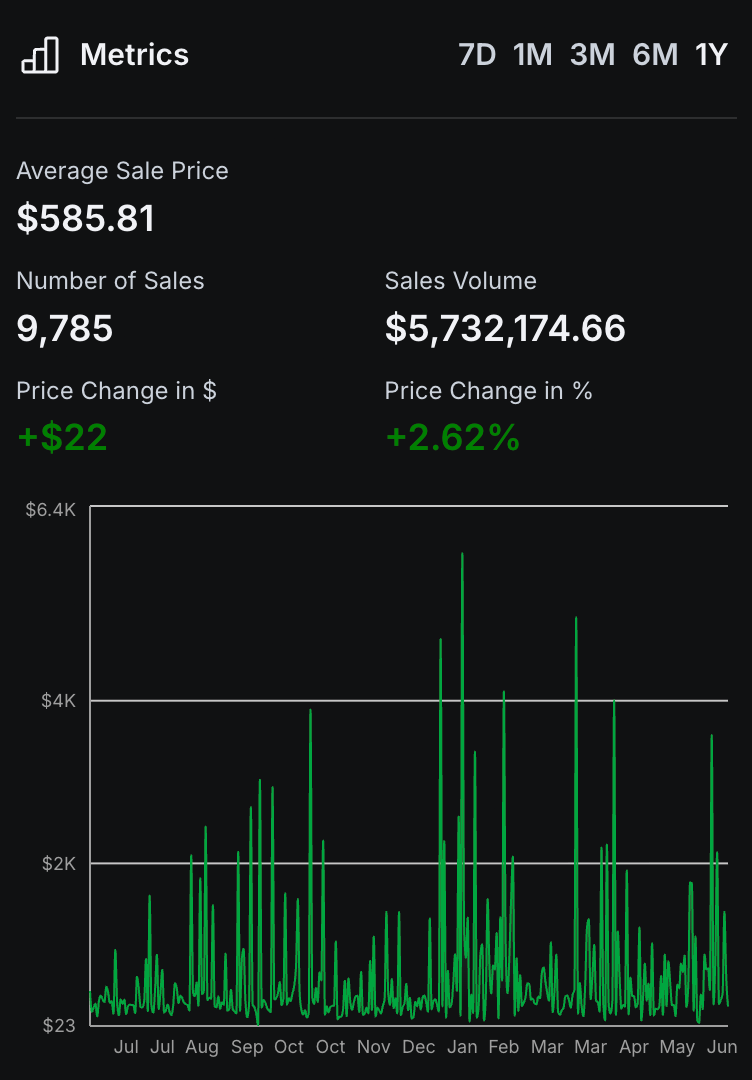
Allen is the modern wildcard, and he earns his spot precisely because his cards split into two completely different markets. His base rookie is mass-produced and behaves like it: it spiked during the boom, then fell back to double digits. Anyone who bought the base card at the 2021 peak is underwater — a sobering counterpoint to the vintage entries.
His scarce, serial-numbered parallels [versions printed in tiny, hand-stamped quantities] are a different animal entirely. As Allen has played at an MVP level, those one-of-a-few cards have pushed into the six figures. The takeaway for modern collecting is stark: with current-era players, the print run matters more than the player.
What Collectors Should Know: For ultra-modern cards, durable value lives in low-numbered parallels and autographs — the base rookie of even an elite player can lose most of its boom-era gains.
Data courtesy of Collectibles.com player registry
3. Jim Brown — 1958 Topps #62
Cost: About a nickel a pack in 1958 — roughly a penny a card.
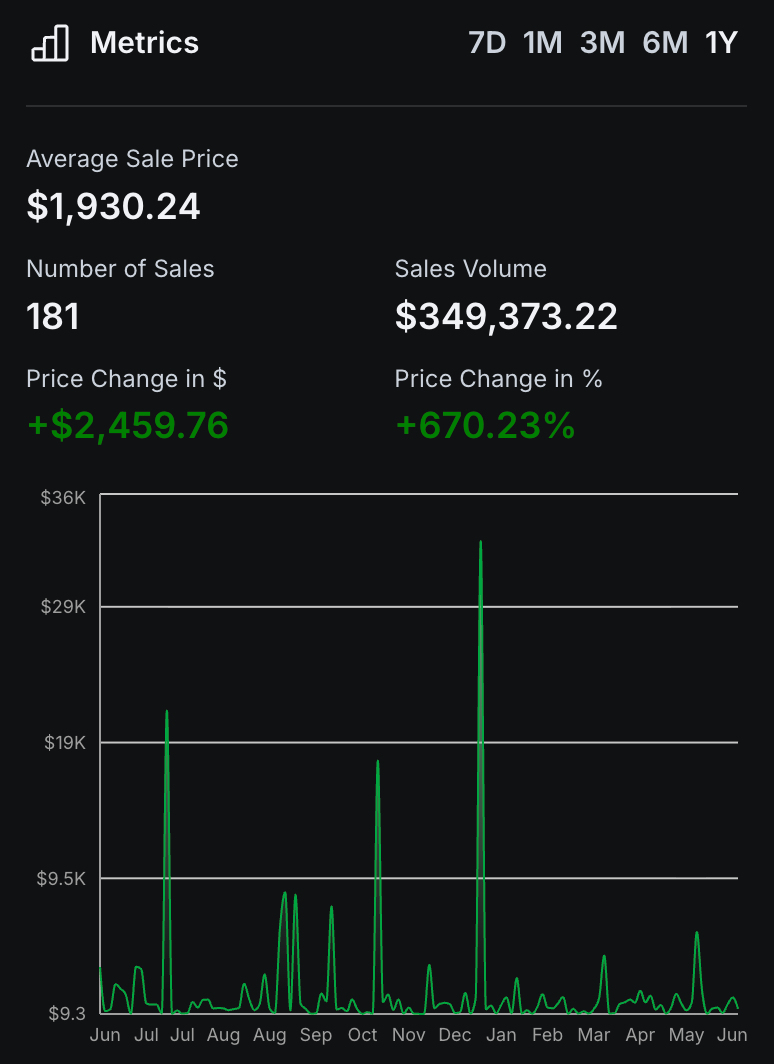
Today: A PSA 9 sold for just under $30,000 in 2010, then $358,500 at Heritage in 2016, and high-grade examples are valued today in the low-to-mid six figures (commonly cited around $300,000).
Most expensive Brown card: His 1958 Topps #62 rookie in PSA 9, which reached $358,500 at Heritage in 2016.
Image courtesy of PSA
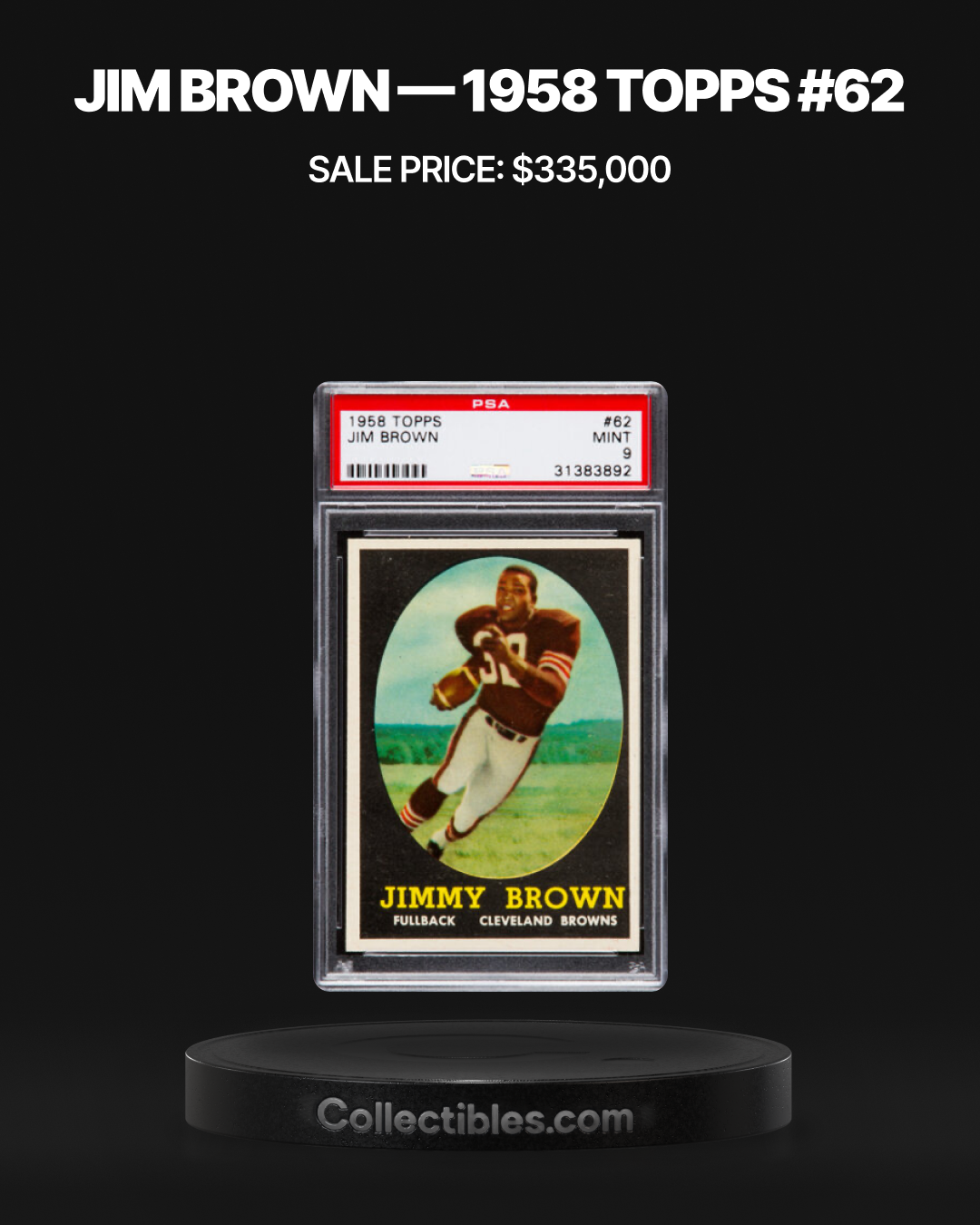
The oldest card on the list belongs to a man many still call the greatest player, period. Brown's only recognized rookie is the gem of the 1958 Topps set, and genuine high grades are vanishingly rare — PSA has never awarded a 10, and only a tiny handful of PSA 9s exist. Even a mid-grade PSA 7 now sells for several thousand dollars.
This is vintage appreciation in its purest form: a finite supply of an irreplaceable card, a legacy that only grows, and no manufacturer able to "reprint" scarcity into the market. The 2010-to-today arc on the PSA 9 — roughly 10x in fifteen years — is the kind of steady, low-drama climb that defines true blue-chip vintage.
What Collectors Should Know: With no PSA 10 in existence and only a few PSA 9s, this card's supply is effectively fixed forever, which is what underwrites its six-figure valuations.
Data courtesy of Collectibles.com player registry
2. Tom Brady — 2000 Playoff Contenders Championship Ticket #144
Cost: A random autograph pull from 2000 Playoff Contenders wax boxes that retailed for under $100.
Today: In 2021, the card became the first football card to cross $1 million, then $2.25 million, then a record $3.1 million — all within a few months.
Most expensive Brady card: This 2000 Playoff Contenders Championship Ticket (/100), which set the record at $3.1 million (Lelands, 2021).
Image courtesy of Lelands Auctions
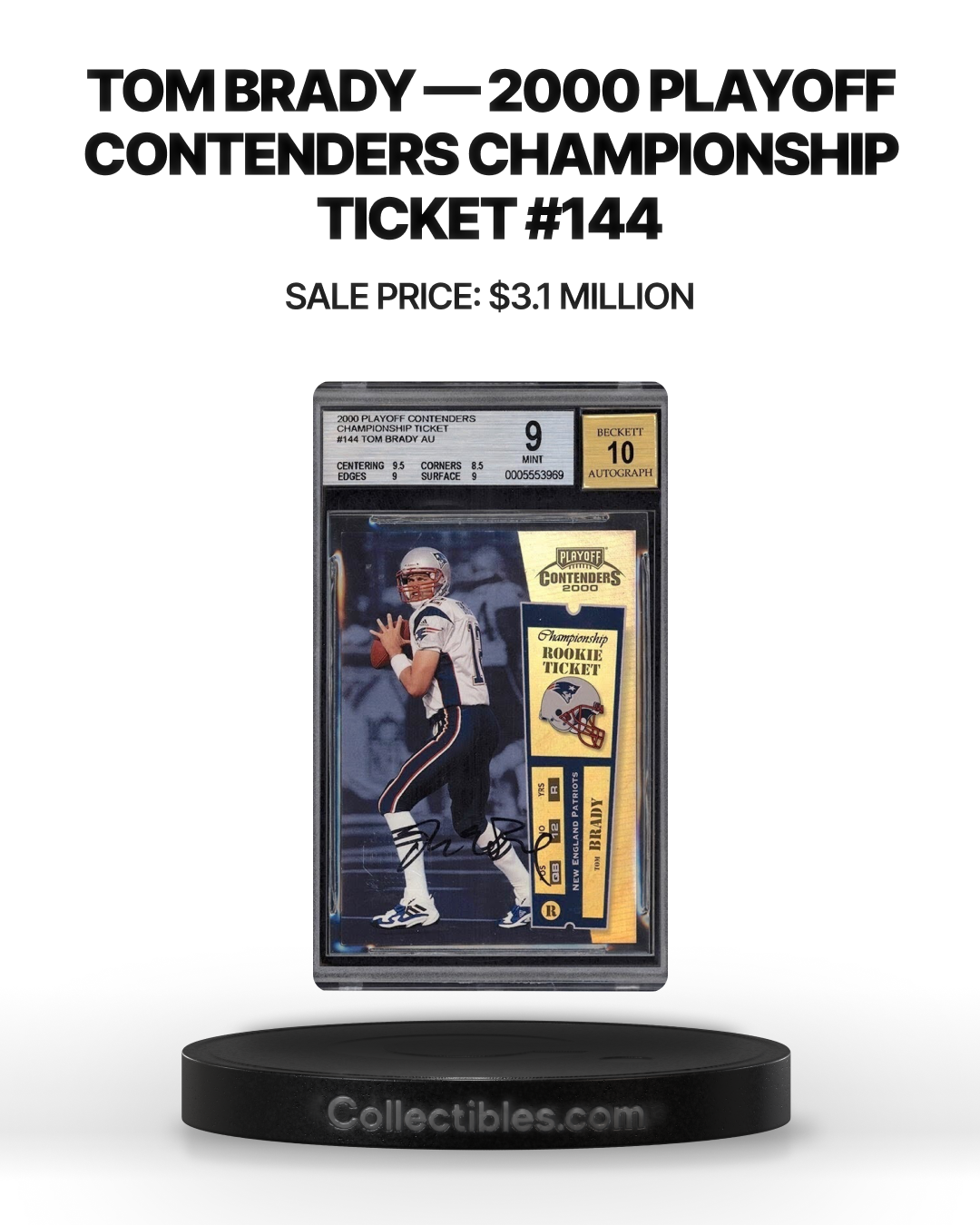
The "Holy Grail" of Brady rookies, and the card that broke football's seven-figure ceiling. The Championship Ticket is the rarest autograph [on-card signature] parallel of Brady's rookie, with a print run of just 100. As Brady stacked Super Bowls and the pandemic boom peaked, the card's price exploded in a documented chain of sales: a BGS 8 changed hands privately for $1.32 million in March 2021 (the first football card ever over $1M, bought by FitBit's co-founder), a BGS 8.5 hit $2,252,855 at Lelands in April, and a BGS 9 reached $3,107,032 at Lelands by June.
The provenance footnote is the best part: the record $2.25 million copy, numbered 099/100, had been bought on eBay more than a decade earlier and quietly held in a private collection — a reminder that the best entries are often made long before the spotlight arrives.
What Collectors Should Know: With only 100 autographed copies in existence and the GOAT's name attached, this card crossed the $1 million, $2 million, and $3 million thresholds in a single year.
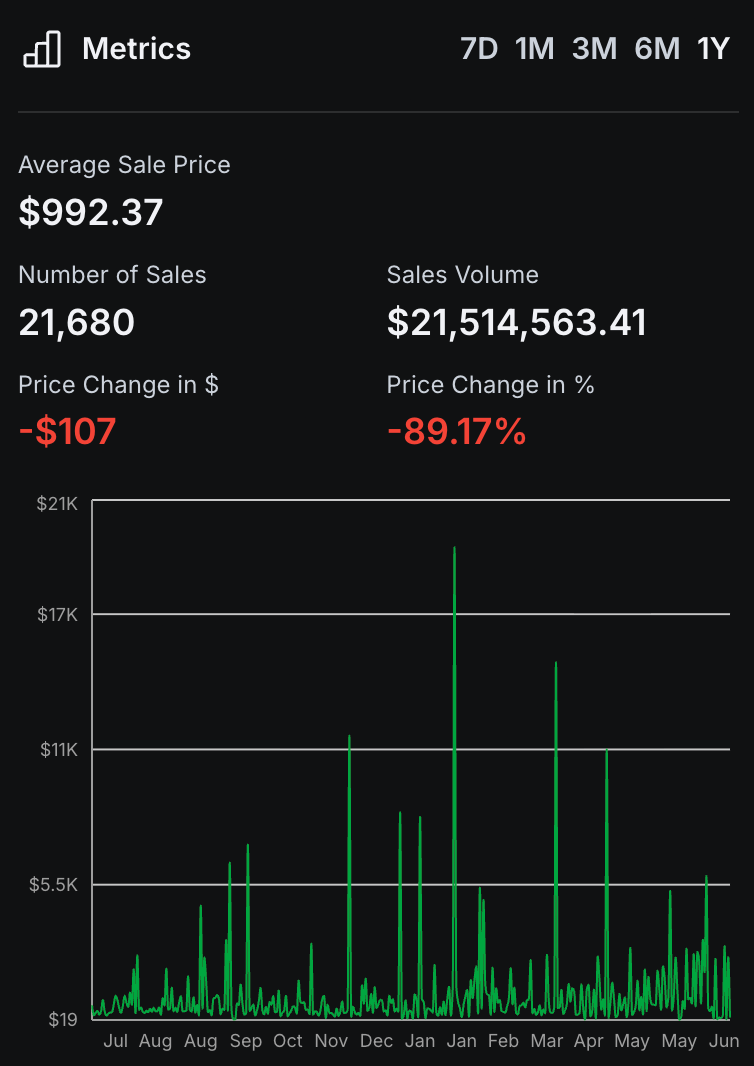
Data courtesy of Collectibles.com player registry
1. Patrick Mahomes — 2017 Panini National Treasures Rookie Patch Auto #161
Cost: A random pull from a 2017 National Treasures box — a premium product with just eight cards per box.
Today: Standard /99 RPAs topped $90,000 by 2021, a Black parallel numbered /5 sold for $840,000, and the Platinum NFL Shield 1/1 sold for $4.3 million — the most ever paid for a football card.
Most expensive Mahomes card: This 2017 National Treasures Platinum NFL Shield RPA (1/1), which sold for $4.3 million — the most ever paid for a football card
Image courtesy of Beckket Grading.
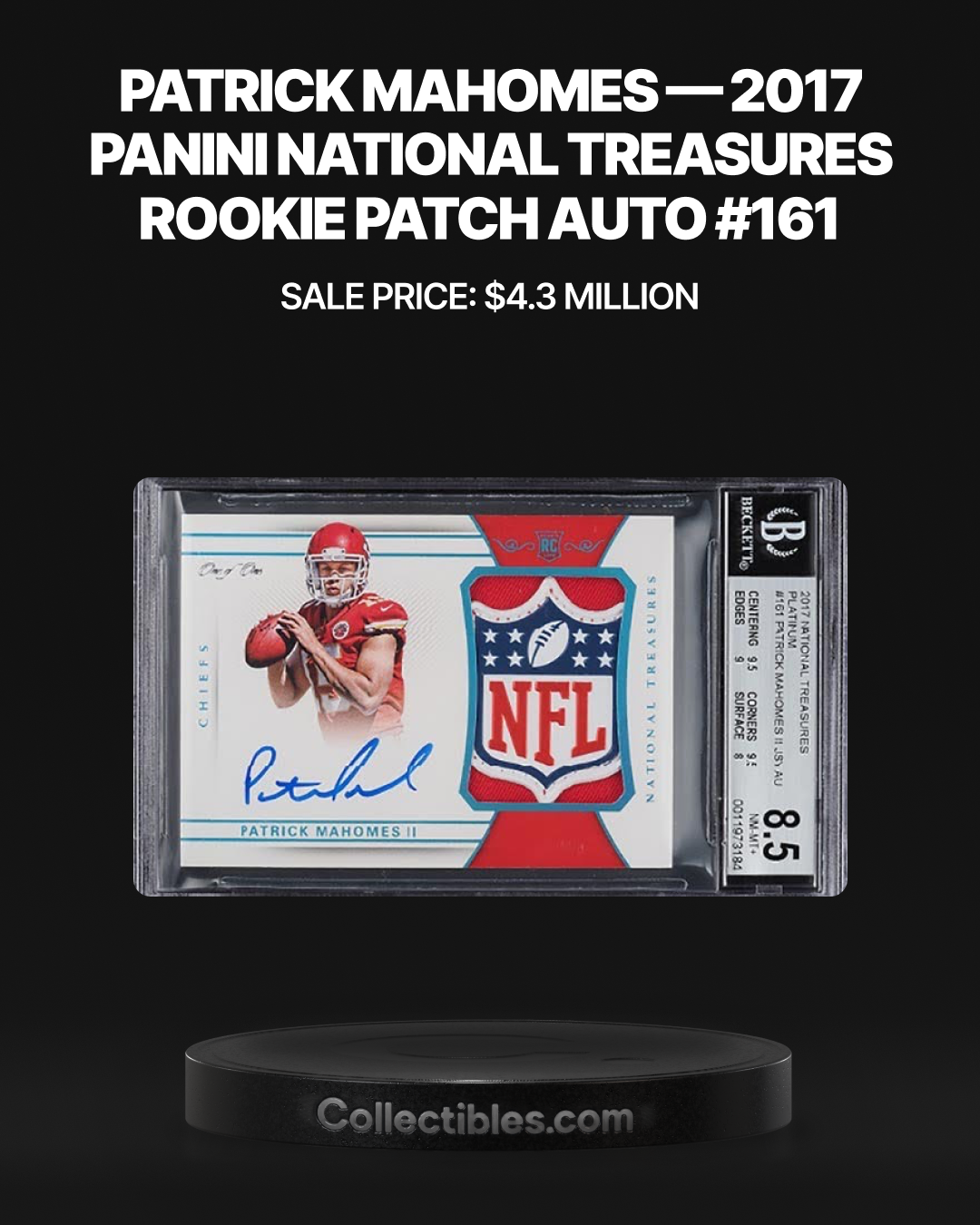
The current king. The National Treasures RPA [rookie patch autograph — a card combining an on-card signature with a swatch of player-worn jersey material] is the most coveted Mahomes rookie, and its one-of-one Platinum version carries the NFL Shield logo cut from a game-worn jersey — the rarest patch type in the hobby. That 1/1, graded BGS 8.5 with a 10 autograph, sold via a PWCC-brokered private deal to LJ's Card Shop in July 2021 for $4.3 million, surpassing Brady's $3.1 million record.
The "why" is the cleanest on the list: a player widely viewed as the heir to Brady, multiple Super Bowls before age 30, and a card format (on-card auto, game-worn shield, serial-numbered rarity) that ticks every box collectors and investors chase. Even his more "common" /99 RPAs have appreciated enormously as his résumé has grown.
What Collectors Should Know: This is the most expensive football card ever sold, and its value rests on the rarest possible combination — a one-of-one, an on-card autograph, an NFL Shield patch, and a generational quarterback.
Data courtesy of Collectibles.com player registry
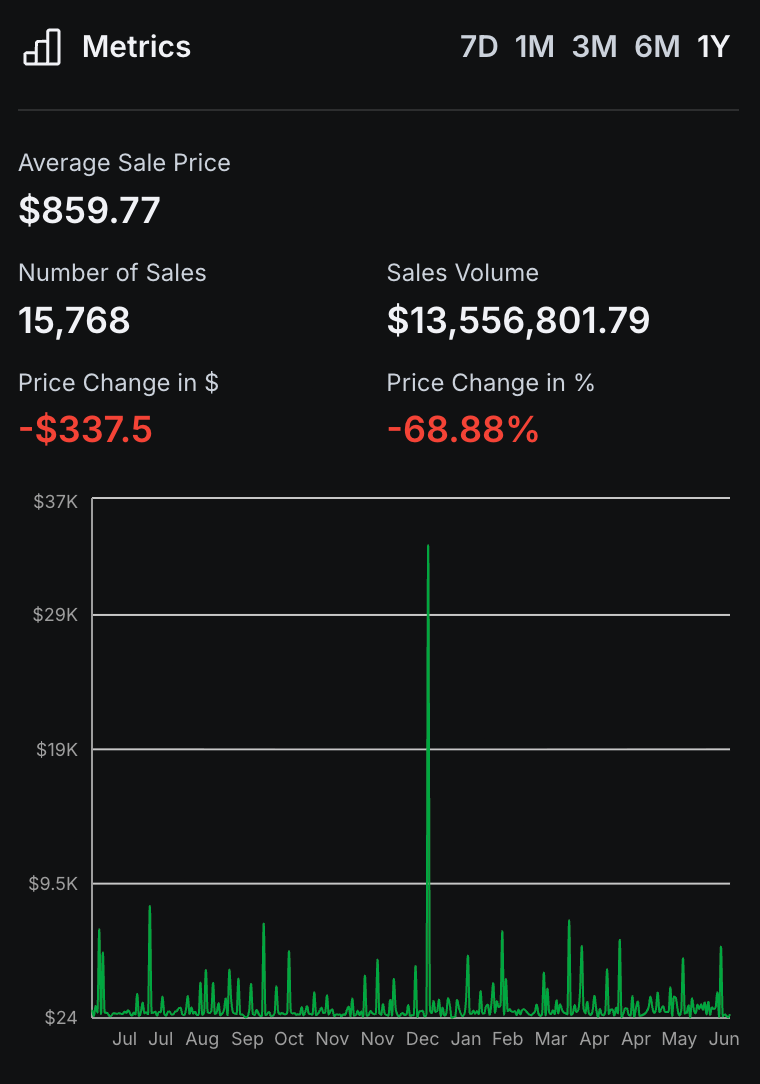
The Other Side of the Ledger: Where Football Card "Investing" Goes Wrong
It would be dishonest to run a list like this without the warnings. The same forces that built these prices have erased plenty of others:
- The base-card trap: Modern base rookies print in enormous numbers. Josh Allen's base PSA 10 lost most of its 2021 value; he's the rule, not the exception.
- Boom-era buyers got burned: Cards bought at the 2020–2021 peak — even Montana and Rice in certain grades — saw 40–60% corrections. Timing matters as much as the card.
- Population creep: As more copies get graded, "scarce" can become "common." A card's pop report can change the math underneath you.
- The condition is unforgiving: The difference between a PSA 9 and a PSA 10 can be invisible to the naked eye and worth tens of thousands of dollars. Buy the card, not the hype.
- The cards that endure share the traits at the top of this article: finite supply, condition scarcity, and a legacy that is what compounds. Everything else is a bet on a moment.
Final Thoughts
The most valuable football cards share a quiet pattern: they were rarely obvious at the time. A 30-cent pack pull, a $65 raw rookie, an eBay listing bought and forgotten for a decade — the value was always there, waiting for legacy and scarcity to catch up.
You don't need a $4.3 million Mahomes to play this game well. You need to know what you're holding. Whether it's a vintage rookie in a shoebox or a modern parallel you pulled last season, the first step is the same: catalogue it, grade your contenders, and track what the market is actually doing — not what social media says it's doing.
That's exactly what Collectibles.com is built for. Scan your cards, organize them into a searchable digital inventory, monitor real values over time, and connect with a community of collectors who share the obsession. The smartest collectors aren't the ones with the most money — they're the ones who know what they own.
Want to pull grails from our Multi-Sport Repackz?
Use the code "RIP20" for a discount on your first rip!
OPEN REPACKZ NOW —>
Frequently Asked Questions
What is the most valuable football card ever sold?
A 2017 Panini National Treasures Patrick Mahomes Platinum NFL Shield rookie patch autograph, numbered 1/1, sold for $4.3 million in a 2021 private sale brokered by PWCC — the most ever paid for a football card.
What makes a football card valuable?
Condition (gem-grade copies can be worth 10x or more than the same card one grade lower), rarity (low print runs, serial-numbered parallels, and condition scarcity), and provenance (documented ownership, original packaging, and third-party grading from PSA, BGS, or SGC).
Are vintage or modern football cards a better investment?
Vintage Hall-of-Fame rookies in high grade tend to appreciate more steadily because supply is fixed forever. Modern cards can spike faster but are far more volatile, and value concentrates in scarce parallels rather than base rookies.
Why is the Tom Brady Championship Ticket so expensive?
It's the rarest autographed parallel of Brady's rookie, with a print run of just 100. Combine that scarcity with the most decorated career in NFL history and a record-breaking market, and it became the first football card to cross $1 million.
Where are the most valuable football cards sold?
Major sales run through auction houses including Goldin, Lelands, Heritage, PWCC, and Fanatics Collect, alongside significant private sales through specialty dealers.
Whether you're just starting the hobby or already on your way to building a serious collection, Collectibles.com offers a super app to easily organize, manage, value, and showcase everything you own — all at your fingertips.
Download our IOS App
Download our Android App

Disclaimer: All content on Collectibles.com and shared publicly is for educational and informational purposes only and does not constitute investment, financial, tax, or legal advice. Collectibles.com and its partners are not registered investment advisors. Investing in collectibles carries a high risk of loss, including total loss of principal, and is speculative and unsuitable for many investors. Past performance is no guarantee of future results. Always consult qualified professionals before making decisions. No recommendations or solicitations are intended.

